
O-RING COATING: Comprehensive Analysis & Solutions
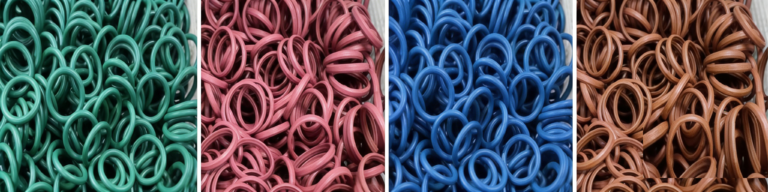
A coated O‑ring is essentially a functional thin layer applied to the surface of a rubber O‑ring substrate. This layer imparts additional surface properties—such as low friction, chemical resistance, anti‑stick properties, or electrical conductivity—without compromising the rubber’s inherent elasticity and sealing capability. Depending on the coating material and process, O‑ring coatings can be divided into several technical routes.
Table of content
- Why coating needed for O‑rings
- Classification by Process: Dry Coating vs. Wet Coating
- Classification by Material: Fluorinated vs. Non‑Fluorinated Coatings
- OTE Coating Solutions
- Qualification & Technical Support
1. Why coating needed for O‑rings?
Uncoated rubber O‑rings (EPDM, FKM, FVMQ, etc.) often face the following challenges in service:
High friction: Rubber against metal grooves exhibits a high coefficient of friction, leading to stick‑slip, high breakaway force, and uneven motion in dynamic applications.
Wear and shortened life: In reciprocating or rotary motion, the rubber surface is susceptible to abrasion, causing premature seal failure.
Chemical attack: Aggressive media can directly attack the rubber polymer, causing swelling, hardening, or degradation.
Sticking and difficult installation: Rubber surfaces tend to adhere to mating parts, especially after prolonged contact or at elevated temperatures, making disassembly difficult and potentially damaging the seal.
Static charge accumulation: Rubber is an electrical insulator; in explosive atmospheres, static build‑up can pose a safety risk.
The essence of coating technology is to create a “functional barrier” between the rubber substrate and the operating environment—preserving the elastic sealing core while endowing the surface with entirely new physical and chemical characteristics.
2. Classification by Process: Dry Coating vs. Wet Coating
2.1 Dry Coating
Dry coating refers to processes where the coating material is deposited onto the O‑ring surface in solid or plasma form, without the use of liquid solvents or dispersions.
Common technologies:
Physical Vapor Deposition (PVD): Under high vacuum, coating materials (e.g., metals, DLC) are evaporated or sputtered and deposited onto the substrate.
Plasma polymerization: Gaseous monomers are polymerized on the substrate surface using plasma energy, forming an ultra‑thin organic layer.
Powder coating: Solid powder is electrostatically applied to the substrate and then fused into a film by heat.
Features and advantages:
Extremely thin coatings: Typically from nanometers to a few micrometers, barely changing O‑ring dimensions.
High adhesion: Plasma‑based technologies can achieve bonding at the molecular level.
Solvent‑free and environmentally friendly: No VOC emissions.
High temperature resistance: Certain dry coatings (e.g., DLC) can withstand very high temperatures.
Limitations:
High capital investment: Vacuum and plasma equipment are costly.
Coverage of complex shapes: Achieving uniform coating over the entire O‑ring surface can be challenging.
Limited material selection: Not all functional materials are suitable for dry processes.
2.2 Wet Coating
Wet coating involves applying the coating material in liquid form (solution, emulsion, or dispersion) onto the O‑ring surface, followed by heat curing to form a solid film.
Common technologies:
Spraying: Automated spray guns apply the coating evenly; suitable for batch production.
Dipping: O‑rings are immersed in a coating bath, then excess material is removed by gravity or centrifugation; ideal for small sizes or full‑surface encapsulation.
Roll coating: Suitable for continuous production of small O‑rings in large quantities.
Features and advantages:
Wide material choice: A broad range of polymers, lubricants, and additives can be used.
Adjustable coating thickness: From a few micrometers to tens of micrometers, flexible for different applications.
Mature processes: Lower capital investment, easy to scale for industrial production.
Full surface coverage: Dipping can achieve complete, void‑free encapsulation.
Limitations:
Solvent handling: Some coatings require solvents, necessitating environmental control equipment.
Curing temperature constraints: The curing temperature must be within the rubber substrate’s heat resistance limit.
We have extensive experience in wet coating, particularly in high‑precision spraying and dipping processes, with mature production lines and quality control systems. We also utilize plasma pretreatment as an auxiliary dry technology to enhance coating adhesion.
3. Classification by Material: Fluorinated vs. Non‑Fluorinated Coatings
The coating material determines the key functional properties of the O‑ring surface. Against the backdrop of increasingly stringent global environmental regulations, the use of fluorinated materials (especially PFAS substances) is facing growing regulatory scrutiny. OTE closely monitors these developments, offering both high‑performance fluorinated coating solutions and compliant non‑fluorinated alternatives to help customers meet evolving requirements.
Background on PFAS Regulations
PFAS (per‑ and polyfluoroalkyl substances) is a large family of thousands of chemicals, including PTFE and PFPE. In recent years, regions such as the EU and the United States have been progressively strengthening PFAS controls. As a responsible manufacturer, OTE continuously tracks regulatory developments to ensure that our fluorinated coating products comply with current regulations and provide customers with the necessary compliance support.
3.1 Fluorinated Coatings
Fluorinated coatings have long been the first choice for high‑performance O‑ring coatings, thanks to their excellent low friction, chemical resistance, and thermal stability. OTE offers two main categories of fluorinated coating solutions:
3.1.1 PTFE‑Based Coatings
Polytetrafluoroethylene (PTFE) is the most widely used fluorinated coating material, known as the “king of plastics” for its extremely low coefficient of friction and outstanding chemical inertness.
Key properties:
Ultra‑low friction: Coefficient of dynamic friction as low as 0.04–0.10, significantly reducing breakaway force and running energy consumption.
Self‑lubrication: Provides stable lubrication even in the absence of oil or grease.
Chemical inertness: Resists almost all strong acids, bases, and organic solvents.
Anti‑stick: Very low surface energy prevents adhesion of media to the seal.
Wide temperature range: Suitable for applications from –196 °C to +260 °C.
Applications:
Pneumatic actuators, hydraulic cylinders (friction reduction, elimination of stick‑slip)
Chemical pumps and valves (corrosion resistance)
Food and pharmaceutical equipment (easy cleaning, FDA compliance)
Automotive components (wear reduction)
3.2 Non‑Fluorinated Coatings
For applications where PFAS regulations restrict the use of fluorinated materials or where customers specifically require fluorine‑free solutions, OTE offers a variety of non‑fluorinated coating options. These alternatives can match or even surpass fluorinated coatings in specific performance aspects.
3.2.1 Molybdenum Disulfide (MoS₂) Coating
Properties:
Excellent solid lubrication with coefficient of friction as low as 0.05–0.10.
High load‑carrying capacity, suitable for heavy‑duty applications.
Operating temperature range –180 °C to +350 °C.
Good affinity to metals.
Applications:
Heavy‑load mechanical seals
Aerospace components
Military equipment
4. OTE’s PTFE Coating Solutions
OTE offers the following differentiated PTFE coating solutions:
Solution 1: Standard Lubrication Coating
Applications: Pneumatic components, hydraulic seals, general industrial equipment
Features:
Single‑layer PTFE modified coating, thickness 10–25 µm
Enhanced with solid lubricants such as MoS₂ or graphite for even lower friction
Solution 2: Heavy‑Duty Anti‑Corrosion Coating
Applications: Chemical pumps and valves, oil & gas equipment, sour gas sealing
Features:
Two‑layer structure: high‑adhesion primer + high‑purity PTFE topcoat
Coating thickness 30–50 µm, providing a stronger barrier
Solution 3: Conductive / Anti‑Static Coating
Applications: Mining equipment, petrochemical explosion‑proof areas, precision electronics
Features:
PTFE matrix homogeneously loaded with conductive carbon black or carbon nanotubes
Surface resistivity controlled to 10³–10⁵ Ω/sq
Retains PTFE’s inherent lubricity
Solution 4: Ultra‑Thin Precision Coating
Applications: Micro O‑rings, precision instruments, high‑sensitivity valves
Features:
Coating thickness 5–10 µm, minimal dimensional impact
Dipping process ensures full surface coverage
Suitable for various small‑size precision rubber parts
Advantages:
Virtually no change to original O‑ring dimensional tolerances
Ideal for precision sealing applications with tight clearances
Maintains excellent adhesion and lubricity
Note on PFAS Compliance
Currently, our PTFE coating products use PFOA‑free, environmentally friendly coatings that comply with EU REACH and US EPA requirements. Should customers face additional PFAS restrictions in their region or industry, OTE can provide non‑fluorinated alternative coating solutions (see Section 3) to ensure ongoing regulatory compliance.
5. Quality Assurance & Technical Support
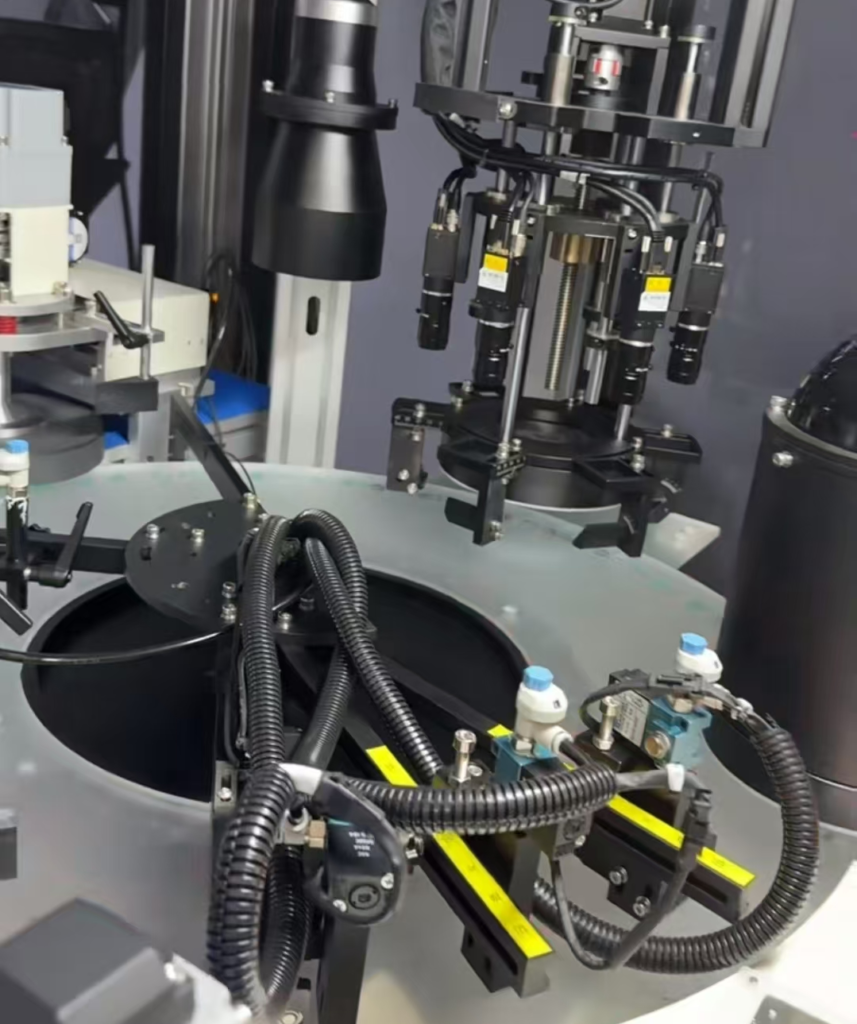
We understands that the quality of coated O‑rings directly affects the safety and reliability of end equipment. For this reason, we have established a comprehensive quality assurance system:
Thickness measurement: High‑precision eddy‑current thickness gauges with multi‑point inspection ensure uniformity.
Friction testing: Dynamic/static coefficient of friction measured under simulated service conditions.
Fluid resistance testing: Accelerated aging under high temperature and pressure to verify coating stability.
For more product information, thanks to contact with us.Our technical team could provides full process support—from substrate selection and coating design to process optimization—ensuring meeting the requirement of your application.